
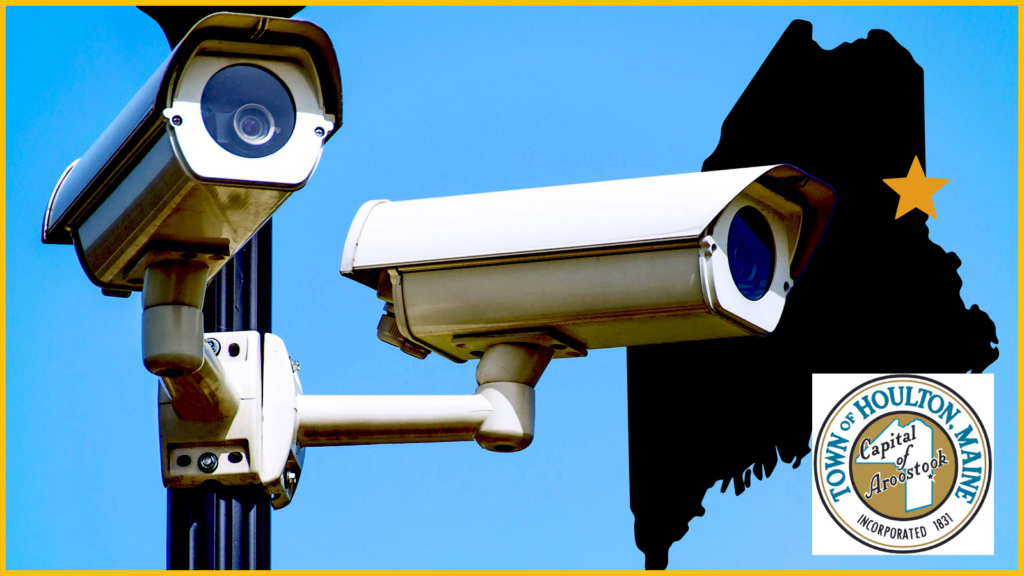
A 6,000 person community in northern Maine became the center of a major surveillance controversy in 2025 after officials installed a network of AI-powered Verkada cameras around town. The town of Houlton, ME—located in northeastern Maine, on the border of Canada—purchased with roughly $130,000 in federal pandemic-relief funds, the system included tools capable of identifying, profiling and tracking people through their appearance, clothing and facial matches, which violates Maine state law.
Three town residents began demanding answers. Through repeated Freedom of Access Act requests, they sought basic information: Where were the cameras? Who could access them? What data were they collecting and storing? How were they being used? What privacy protections existed? Those requests were necessary because residents said town officials had failed to fully disclose the system’s capabilities or provide clear answers about its operation. One resident ultimately sued Houlton over its handling of the records requests.
The community backlash grew as people questioned why a town of roughly 6,000 residents needed such an expansive AI-powered surveillance network. Many saw it as an invasion of privacy and a misuse of federal money. The controversy became even more serious when residents raised concerns that the system’s AI-enhanced facial-surveillance and “people analytics” functions may have violated Maine’s 2021 law sharply restricting government use of facial-recognition technology.
Records later obtained through FOAA requests showed extensive use: more than 56,000 instances of employees opening live video feeds during 2024 and roughly 5,266 profile searches. Town employees from several departments—not only the police—accessed the system, sometimes outside normal working hours. Houlton temporarily shut the cameras off in February 2025, later reactivating them under a policy that supposedly disabled facial recognition, but public pressure and the threat of further legal action continued.
In late 2025, Houlton reached a settlement with the three residents. The town agreed to eliminate user access, remove the cameras, destroy the surveillance data, arrange an independent audit of that deletion and maintain a public log of future FOAA requests. The installed cameras finally came down in February 2026.
This was never simply a dispute over cameras. It was about whether the government can quietly deploy powerful technology, monitor an entire community and leave residents fighting for basic answers. As AI-powered surveillance systems continue to expand across the country, it is essential that residents in local communities continue to ask questions, speak up, and demand real answers.